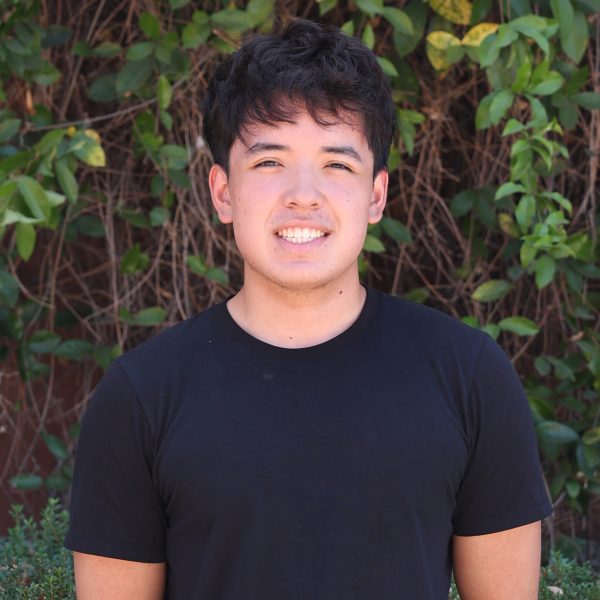
Senior Kali Tuyet knows the heavy weight of May all too well. Between finishing her final year and preparing for the future, the pressure can easily build up. To clear her head, Tuyet plugs in her headphones and takes a walk outdoors. It is a simple habit, but one she relies on to escape the intense stress of the school year.
As Gabrielino High School marks Mental Health Awareness Month this May, students find themselves balancing heavy workloads with their emotional well-being. The dedicated month highlights the resources, habits and conversations that students rely on during this demanding semester.
“Lots of high school students push back mental health and do not put much care into it even though it is such an important part of their lives,” Tuyet said. “Having this dedicated month allows students to focus more on their mental health.”
Senior Nicholas Hoang has also noticed a visible change in the campus atmosphere as the academic year comes to an end. He noted that all of the upcoming Advanced Placement (AP) tests and finals create an environment where students need a break.
“Students need something to calm them down and let their minds be clear when overwhelmed,” Hoang said.
He recommended finding an enjoyable, calming activity to temporarily “forget” the stress.
Gabrielino counselor Chris Saporito said he observes many of these challenges from his office daily. He explained that end-of-year anxiety usually stems from grades, while seniors face a different wave of fear and uncertainty about leaving home.
Recent data from the Gabrielino Wellness Center reinforced these observations, suggesting that fatigue and emotional distress are concerns across campus. According to the center’s February-March report, 55.5% of students reported feeling “tired” upon checking in, while 16.9% arrived feeling “anxious” and 14.3% felt “sad.” The academic strain is felt across all grade levels, with upperclassmen utilizing the space heavily: 12th graders made up 31.8% of the visits, closely followed by 10th graders at 31.5% and 11th graders at 20.3%.
According to Saporito, breaking the stereotype surrounding mental health through open dialogue is the first step toward wellness.
“It is important because it helps people understand that mental health is an important conversation to have,” Saporito said.
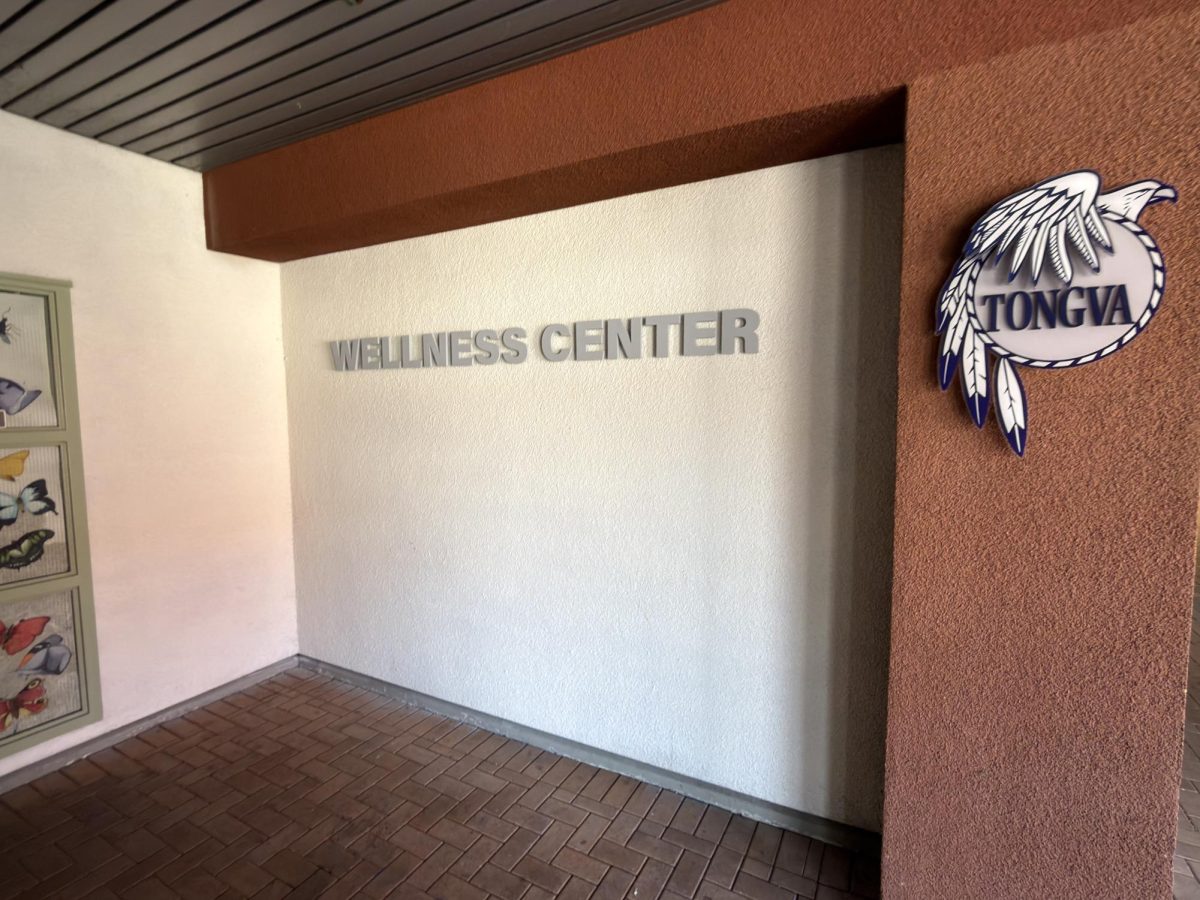
Fortunately, Gabrielino offers several resources and tools for struggling students. The campus features a dedicated Wellness Center, school counselors, interns and school-based mental health therapy. The center has become an important place on campus, seeing 316 total check-ins from 174 unique students over a two-month period.
When students visit, they use multiple tools to relax. The most popular one by far is sleeping or resting, chosen by 41% of visitors, followed by talking and social support at 23.6% and relaxing at 19.2%.
Peer helpers also stand ready to assist their classmates through peer-to-peer support. Tuyet, who serves as a peer helper, noted that talking to a peer is an excellent way to handle stress because they can help unpack whatever is bothering a student. For students requiring deeper care, school counselors, interns and school-based mental health therapy are available as well.
The data shows that taking that step to seek help makes a tangible difference. Nearly 90% of students reported that their immediate needs were met during their visits, and 76.5% of students reported feeling “better” or “much better” by the time they checked out. For the 1% of students who reported feeling worse, the Wellness Center coordinator gave direct support.
For students who feel overwhelmed but do not know where to turn, the path to support begins with a single step. Saporito encouraged anyone in need to visit the school’s dedicated support staff.
“Come to the Wellness Center, ask the questions you have, and we will connect you with resources,” Saporito said.