If you walk into A24’s “The Drama” expecting a breezy romantic comedy, you will get about 20 minutes of exactly that, and then writer-director Kristoffer Borgli pulls the rug out from under you. What follows is one of the most unsettling, funny, and genuinely thought-provoking moviegoing experiences of the year.
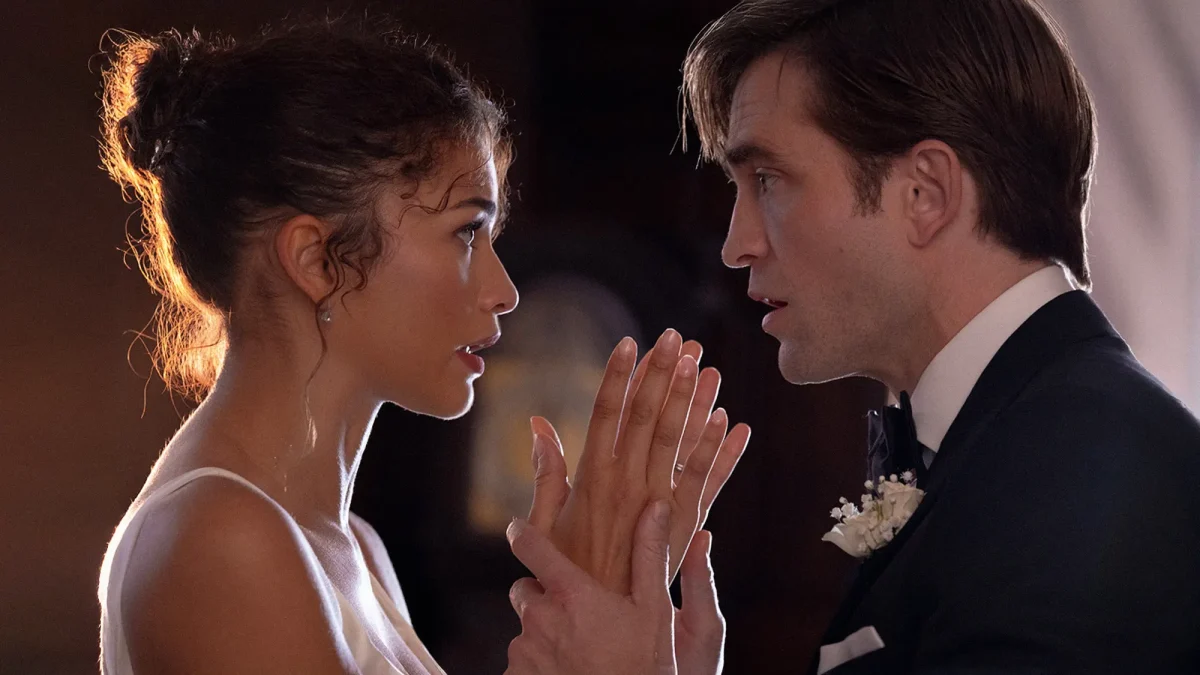
The film opens with Robert Pattinson’s character, Charlie, a charmingly awkward British museum curator who meets Zendaya’s character Emma at a coffee shop in the most imperfect meet-cute imaginable. Their connection feels easy and real, and eventually they plan their wedding. Everything seems perfect, until it is not. A single moment during a casual dinner with close friends sends their relationship into complete freefall, and the movie shifts into something much darker, stranger, and more emotionally complex than its opening scenes suggested.
What makes “The Drama” work so well is how committed it is to sitting in discomfort. This is not a film that ties things up neatly or lets its characters off the hook. Instead, Borgli forces both his characters and his audience to wrestle with deeply uncomfortable questions about trust, forgiveness, and how well you can ever truly know another person. It is the kind of movie that makes you want to talk about it for hours afterward.
Robert Pattinson delivers some of his most compelling work to date. He has spent much of his post-blockbuster career inhabiting men on the verge of collapse, and this role fits him like a glove. There is real craft in the way he builds Charlie up from the early scenes, only to methodically take him apart as the story demands.
Zendaya, in contrast, operates at a lower frequency that suits Emma well. Where Pattinson externalizes his character’s turmoil, she internalizes hers, and the result is a performance that rewards attention. The two leads share a natural chemistry that grounds the film’s outlandish moments in something recognizably human.
The supporting cast contributes meaningfully. Mamoudou Athie brings warmth to the best man, Mike, that the film leans on more than it perhaps lets on, while Alana Haim’s matron of honor, Rachel, is a deliberately abrasive presence. Depending on your patience, she will either read as sharply written or simply exhausting. Both performances, however, serve the story’s broader interests. The film’s editing and score are precise in their comic timing and add to the sharpness when the tone darkens.
In the end, the film earns its place in the conversation. It raises serious questions about honesty, forgiveness, and the limits of intimacy. “The Drama” is, overall, what good cinema should be: challenging, absorbing, and impossible to fully shake.