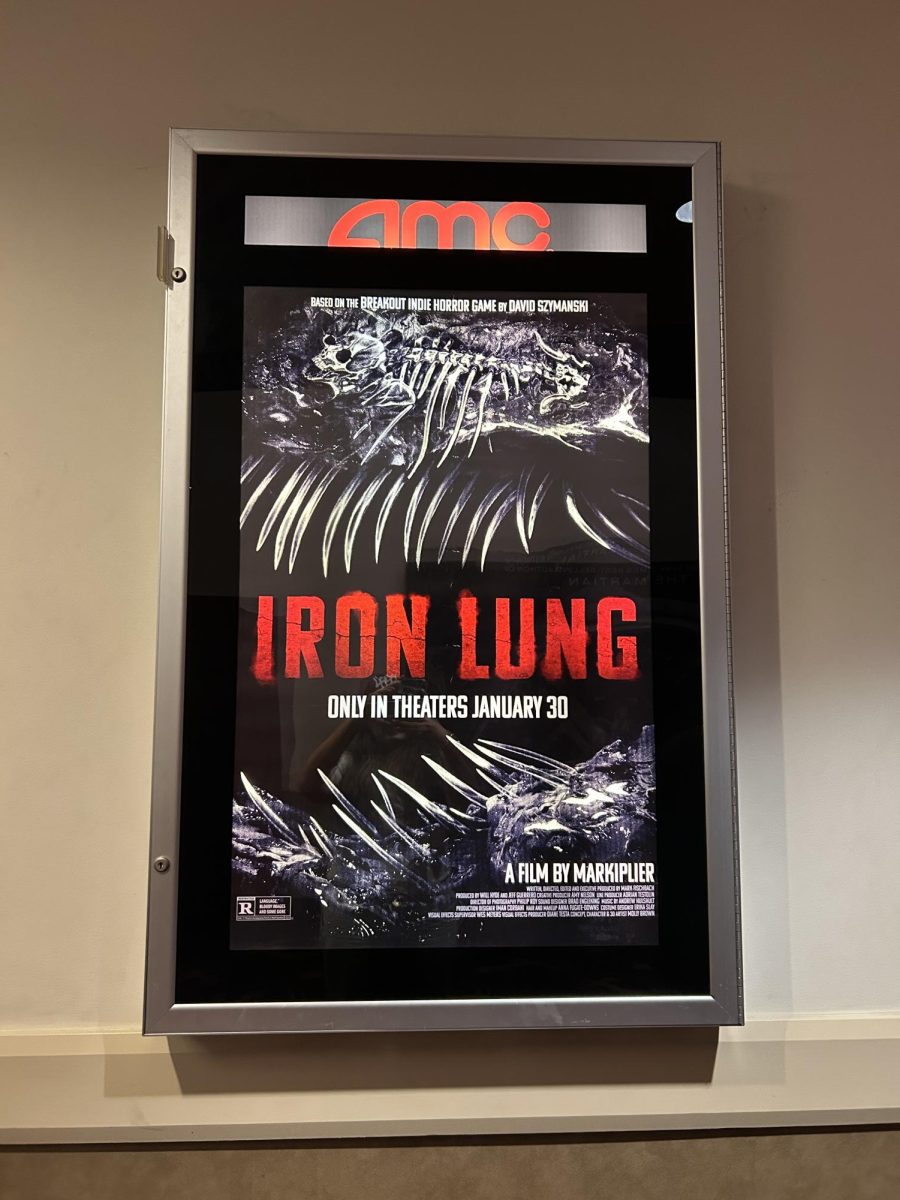
I went into “Iron Lung” with mixed expectations. On one hand, it was a horror movie with growing online buzz. On the other hand, it was directed by Markiplier, someone best known for his YouTube videos rather than theatrical releases. That combination made the film feel less like a normal screening and more like an experiment in whether internet creators can successfully make it into Hollywood.
Based on the indie horror game of the same name, “Iron Lung” follows a lone prisoner sent into a small submarine to explore a blood-red ocean on an abandoned moon. The story is claustrophobic and minimal, focusing almost entirely on isolation, limited communication and the psychological toll of being trapped underwater with something unknown outside the vessel.
After watching it, my answer is complicated but cautiously positive. The movie itself was good, but it had minor flaws.
“Iron Lung” moves at a noticeably slower pace than most modern horror films. Instead of relying on constant jump scares or fast-moving action, it leans into tension and atmosphere. Much of the suspense is built through long stretches of silence, distorted radio transmissions and the constant creaking of metal as the vessel descends deeper into the ocean.
Rather than showing the threat outright, the film forces the audience to sit in uncertainty, which creates a steady sense of dread. That approach will work for some viewers, but others may find themselves wishing the story picked up speed.
At times, the film feels repetitive, circling similar emotional beats and situations rather than pushing forward in new ways. Several sequences follow the same pattern: scanning coordinates, waiting for the next image, reacting to unsettling sounds and then returning to silence. While this repetition reinforces the character’s isolation, it can also make the middle portion of the film feel stretched more than necessary.
Other student viewers had similar reactions. Freshman Jayden Valdez said he was unsure what to expect going in because of Markiplier’s background. “I was honestly curious more than anything,” Valdez said. “I didn’t know if it would feel like a real movie or more like a fan project.”
Markiplier was already a fan of the original “Iron Lung” game before adapting it. His appreciation for the source material shows in how the film recreates its confined setting and unsettling tone. When viewers question whether it would feel like a “real movie,” they are really questioning whether a fan’s passion project can translate into something cinematic rather than something made solely for an existing audience.
On the pacing, Valdez added, “It was slower than I expected. Not terrible, just different from most horror movies.”
Still, for a first major film project, it is impressive how well-produced the movie was. The film never felt messy, and even when the pacing lagged, it stayed engaging enough to hold my attention.
Part of that comes from the focused script and contained setting. By centering almost the entire film inside one submarine, the production avoids overcomplicating itself. The set design feels intentional rather than cheap, with tight camera angles. Markiplier’s performance also carries much of the film, as he convincingly portrays fear, frustration and desperation without needing exaggerated dialogue.
I did not leave the theater bored, just aware that the experience was not quite as sharp or memorable as it could have been.
Valdez ultimately walked out cautiously impressed. “For a first big movie, yeah. You can tell a lot of effort went into it,” he said. “It didn’t blow my mind, but I was entertained the whole time.”
If I had to give “Iron Lung” a rating, I would give it about a three out of five. That score reflects something important: it is not the greatest, but it has potential. I probably will not rush to rewatch it anytime soon, but I do not regret spending my money to see it. It did what a movie is supposed to do; it entertained me.
What stood out to me, though, was not just the film itself but what it represents. Seeing a creator known for gaming videos direct a full-scale movie feels surreal and, in some ways, encouraging for those who are looking to get into the film industry.
What would have made it more memorable, however, is greater variation in its tension. Perhaps more unexpected visual shifts, deeper character backstory or a stronger emotional climax could have broken up the repetition.
“Iron Lung” proves that YouTubers entering traditional film spaces should not automatically be dismissed because they do have potential. It shows that creators can take their work seriously and produce something competently made and watchable.
In the end, “Iron Lung” did not revolutionize horror, but it did accomplish something meaningful: it demonstrated that Markiplier’s leap from YouTube to cinema is possible, even if it still has room to grow. If this movie is any indication, creator-driven films could become more common in the future.