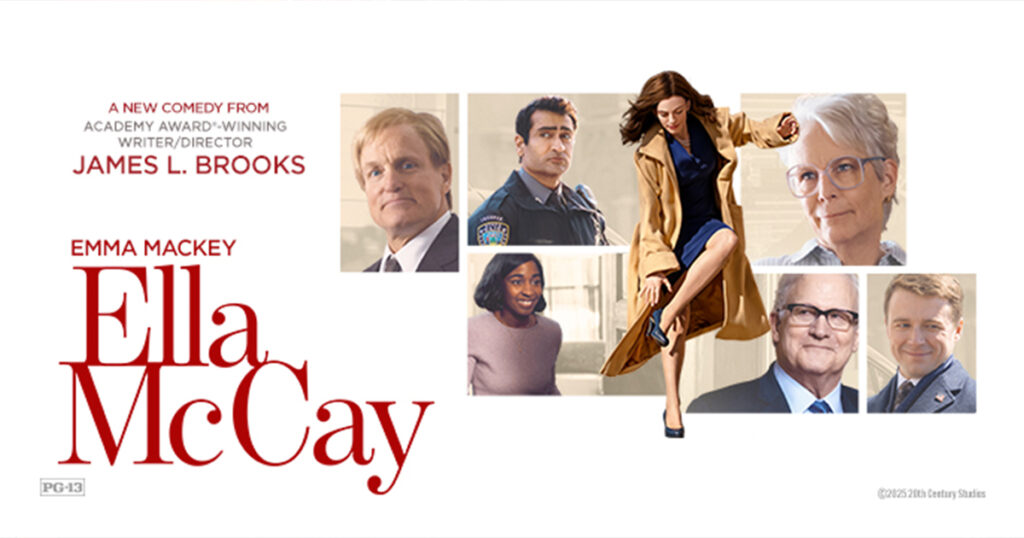
Ella McCay follows the rise of the youngest woman ever to be the governor of Rhode Island: 34-year-old Ella. The movie opened in theaters on Dec. 12 and was highly anticipated, being the first film in over 10 years from Academy Award-winning director James L. Brooks. Unfortunately, despite its $35 million budget, it only made $2.1 million opening weekend, making it one of the worst debuts in recent Disney history.
The film uses a narrator and a book-like storytelling style, giving viewers personal insight into Ella’s world. However, because of this, it often felt like we were being told what happened rather than shown.
At times, the movie jumps through key events in Ella’s life, but the timeline feels unclear. In flashback scenes, characters, lighting and settings look the same despite the passage of time, making it hard to follow. When the movie shows Ella at age 16, the only noticeable difference is that she wears a ponytail.
The film presents several arguments and dramatic conversations, but with little buildup. For example, one of the main conflicts in the movie is Ella’s strained relationship with her father, who cheated on her mother. Instead of allowing the audience to understand the situation through gradual storytelling or emotional buildup, the movie jumps straight into a confrontation where Ella and her father actively state the reason they’re fighting.
This pattern continues throughout the film. We mostly see fallout and consequences, but not the development that leads to them. As a result, many scenes lack emotional weight. In moments where Ella is supposed to be thinking or feeling something, she often stares blankly, with no clear emotion conveyed.
This makes her character seem oddly flat and opinion-less, even though other characters repeatedly insist she is serious and promising. That seriousness is never convincingly shown, leaving Ella’s character inconsistent and lacking presence in her own story.
Characters tend to react calmly to chaotic events, which makes everyone feel emotionally similar—as if they are quietly panicking rather than responding authentically. Many emotional moments in the film feel uncommitted.
Some story choices also stretch believability, such as Ella’s “Tooth Tutor” policy, in which dentists are sent to people’s homes to clean their teeth. The idea is never explained and seems impractical, which made it difficult to root for Ella’s platform as a political figure.
However, some of the side characters brighten the movie. While many of the jokes in this comedy fall flat, Ella’s brother Casey, played by Spike Fearn, stands out as one of the funniest characters, and I found myself rooting for him more than for Ella. Ella’s aunt Helen, played by Jamie Lee Curtis, also adds warmth and depth to her scenes, especially during heart-to-heart conversations.
Overall, the storytelling has highlights—especially Casey and Aunt Helen—but the pacing and character development fall short. The movie tells us Ella is inspiring and ambitious, but never truly shows us why. Without meaningful buildup or emotional range, Ella McCay feels disconnected, leaving me unsure how to root for its protagonist.