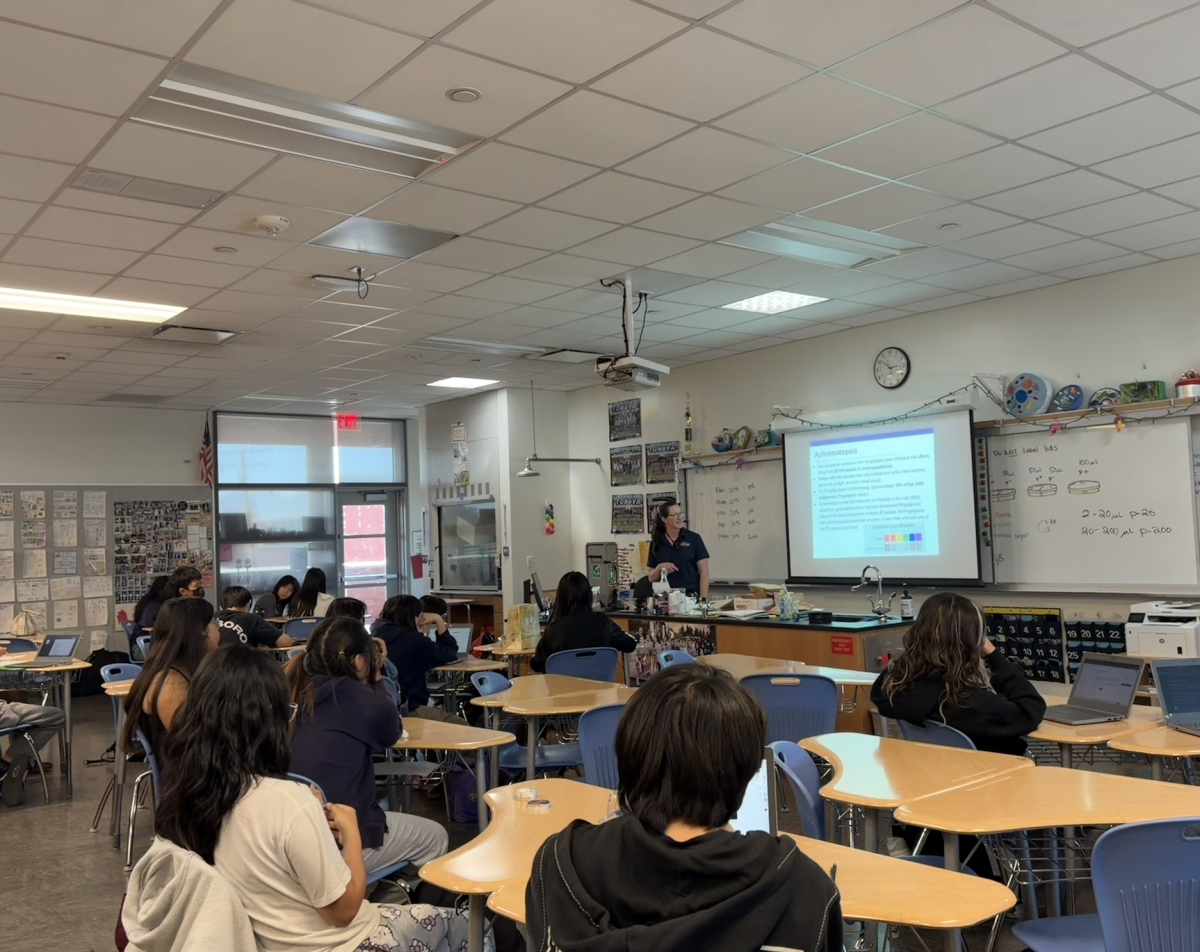
Gabrielino High School will eliminate honors English and honors Biology for incoming freshmen, leaving students without any honors options in those subjects and limited access to advanced coursework in ninth grade. The decision has prompted mixed reactions from staff, with differing views on equity and academic rigor.
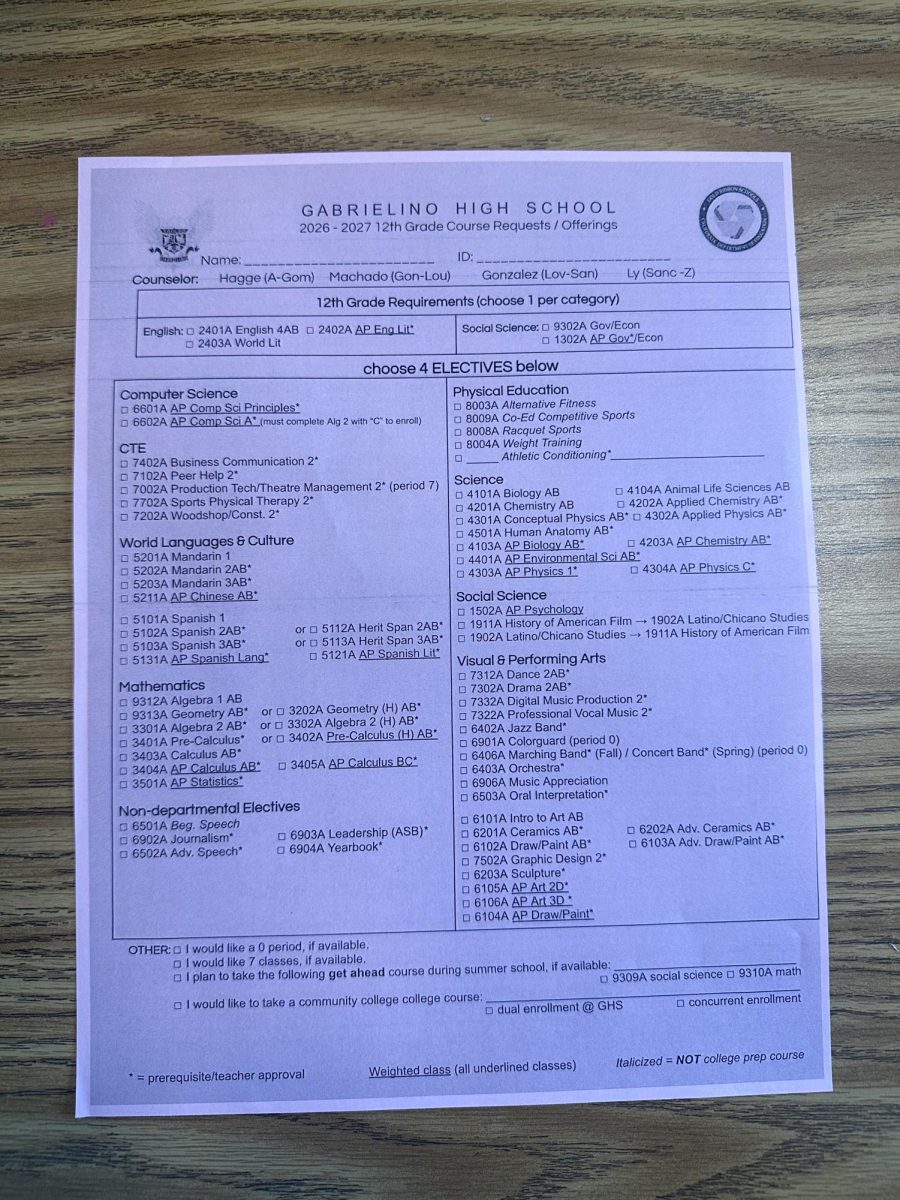
The shift comes as the school reevaluates how advanced coursework is structured. Honors courses were originally designed before Advanced Placement (AP) options expanded, with honors typically offered in grades 9 and 10 and AP courses reserved for grades 11 and 12. In addition, freshman honors courses did not carry a GPA weight. Currently, AP Computer Science Principles is available to ninth graders, and additional AP courses may be opened to freshmen in the coming years.
Counselor Monica Hagge acknowledged the challenge of meeting student expectations at a highly competitive school, explaining that “Gab is a very intense academic school. They [students] want to excel; they always want more, more, more.”
At the same time, she suggested the shift may support students’ transition into high school, noting that “the transition is already hard” and that “many students need time to mature.” Hagge also pointed out that removing honors courses “removes the ability to overload yourself” while allowing classes to be “balanced, in terms of the level of students in the class.”
Still, she admitted uncertainty about the outcome, adding, “I don’t know if it’s a bad thing.”
Honors English teacher Jennifer Mendez described disappointment among families, particularly those who expected younger siblings to follow the same academic path as older students. She noted that some parents “wanted their younger kids to have the same opportunities.”
In the classroom, Mendez emphasized the instructional differences honors courses provide, explaining that going at a faster pace allows her to cover more material, including a focus on “diction, syntax, and tone” and “accurate and precise language.” She added that, as a result, “their writing becomes more intricate.”
While she believes elements of honors instruction can be incorporated into standard classes, she acknowledged limitations, saying integration may not be possible “to the extent of the timing.”
Assistant Principal Chanda Strom framed the decision as an equity-driven shift. Reflecting on past systems, she explained that honors courses were once “exclusive” and could limit access to advanced opportunities.
She questioned their current purpose, asking, “if you have honors and AP classes of the same subject, what purpose does the honors class serve?”
Instead, Strom emphasized broadening access: “instead of having an elite group of kids…you have all,” adding that “we bring everybody up, not just the honors kids.” She also suggested that many benefits of honors courses depend more on teaching quality than course labels, stating that “whoever [is] teaching it can do that in a regular class as well.”
Honors Biology teacher Laura Leyda expressed concern about the long-term academic impact. After 14 years teaching the course, she said, “I’ve enjoyed creating this class… I love teaching the details… and I enjoy challenging my students on the more complex topics.”
She worries that removing honors Biology could make future coursework more difficult, explaining that students may be “jumping from a general bio class to a college-level AP class.”
Leyda also noted that honors enrollment often reflected student motivation, since “being in an honors class was a choice,” and she anticipates challenges in adapting to a broader range of learners.
Still, she remains committed to adjusting her teaching, saying she will “try to keep what I can… and adapt it to meet the needs of more students,” even if that requires slowing the pace and restructuring lessons.
While the school is expanding other offerings—such as ethnic studies courses, financial literacy, and health education aligned with state requirements—the removal of honors English and Biology has led some teachers to question whether students will be sufficiently challenged without traditional honors pathways in ninth grade.
As the policy takes effect, Gabrielino faces a key question: whether eliminating honors tracks will successfully “bring everybody up,” as administrators intend, or reduce opportunities for early academic acceleration in an already high-achieving student body.